Home › Resources › Infographics › Smell Infographic
Smell Infographic
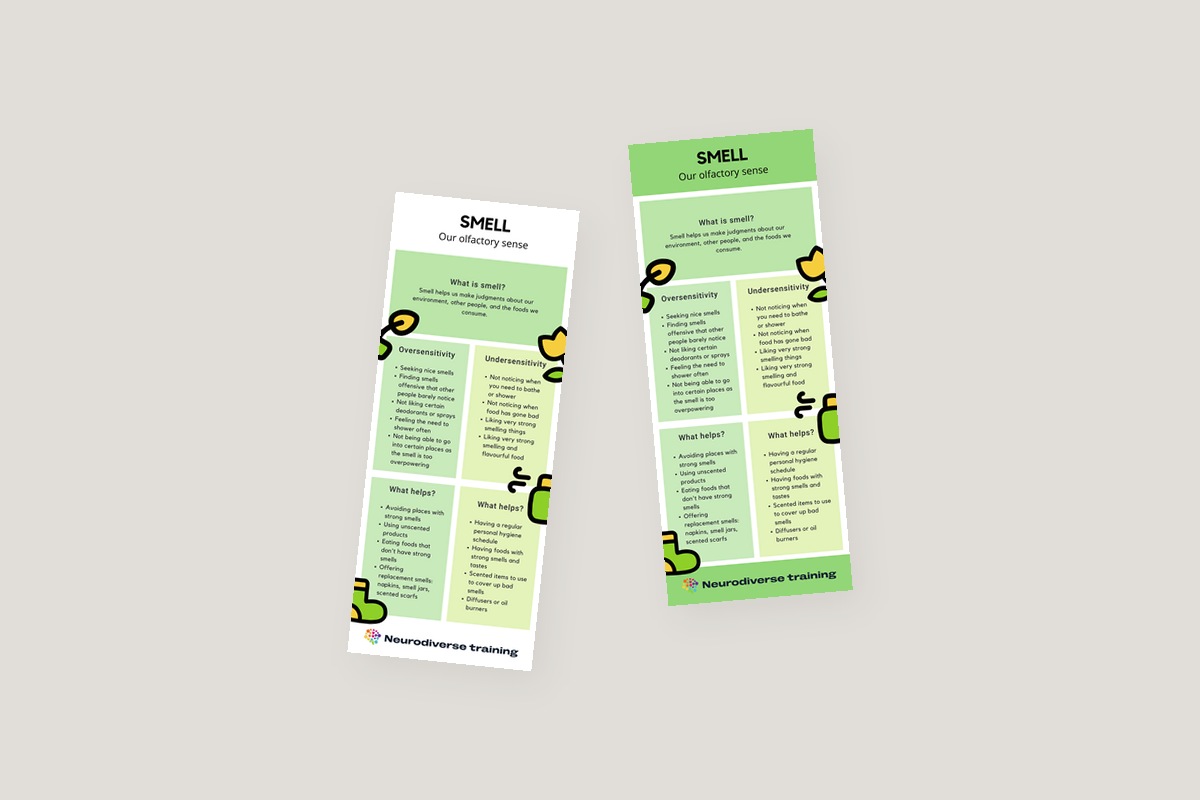
Covers olfactory sensitivity in neurodivergent individuals - from overwhelming scents in public spaces to the use of familiar smells as a calming or grounding tool.
Olfactory processing differences mean that many neurodivergent people experience smells with greater intensity or in ways that can be overwhelming or disorienting. This infographic explains how smell sensitivity affects daily life and what adjustments can help.
Common experiences
- Overwhelming sensitivity to perfumes, cleaning products or food smells
- Difficulty concentrating in environments with strong odours
- Using familiar, comforting scents as a self-regulation tool
- Reduced sensitivity to smell in some individuals
Practical adjustments
Fragrance-free policies in workplaces, advance notice of cleaning schedules, and allowing individuals to use familiar scents for comfort can all help.
Who is this for?
Employers, educators, healthcare professionals, parents and carers, and anyone supporting neurodivergent people in daily life.
Download Free
Sign up to our mailing list once to get instant access to all our free infographics and posters.
← Back to Resources- High-resolution PDF
- Printable A3 & A4 sizes
- Accessible colour palette
- Created by our neurodivergent team
- Unsubscribe at any time