Home › Resources › Infographics › Taste Infographic
Taste Infographic
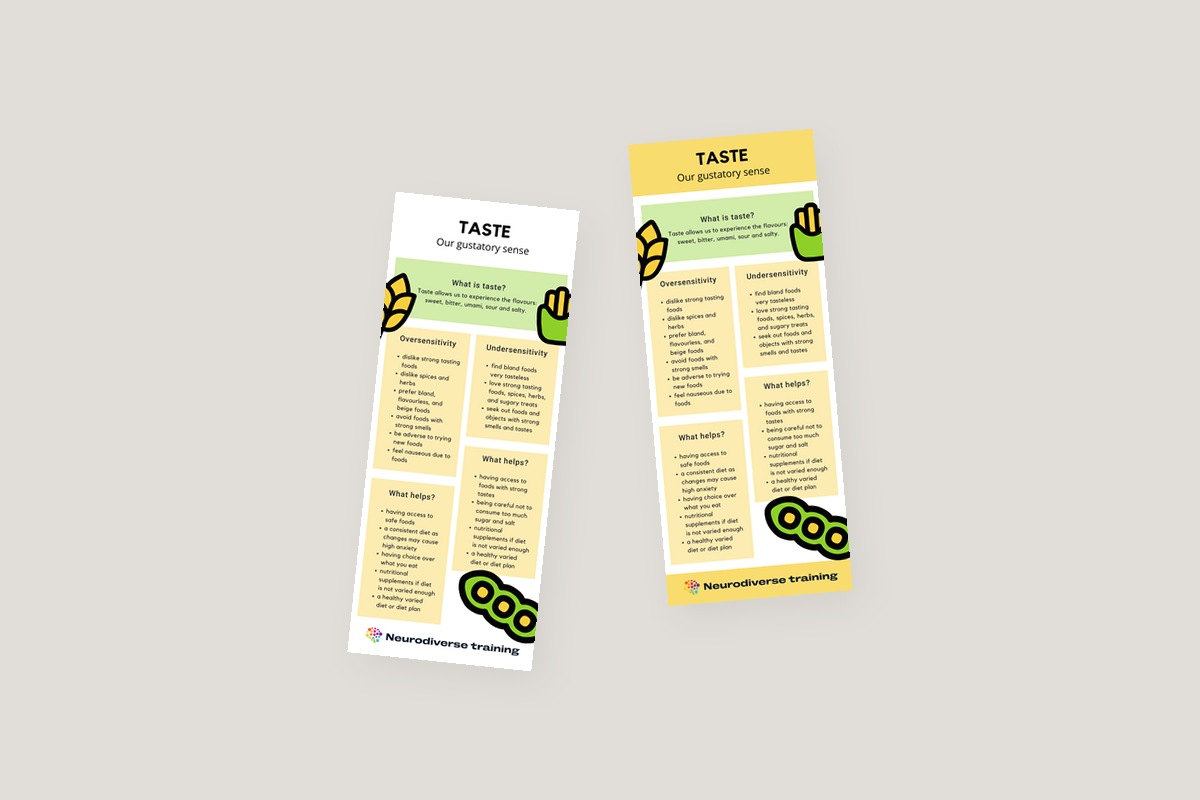
Explains taste sensitivity and food texture differences in neurodivergent people, including links to ARFID and how eating differences can affect daily life.
Taste and texture sensitivity are common in neurodivergent people, particularly those who are autistic or have ADHD. This infographic explains the range of experiences and how they connect to conditions like ARFID.
Common experiences
- Strong aversion to certain food textures, temperatures or flavours
- A very limited range of safe foods
- Gagging or nausea in response to certain foods
- Seeking out intense flavours or textures for sensory input
Practical adjustments
Understanding that food selectivity is not a choice or a behaviour issue is the first step. Flexible approaches to mealtimes and patience with gradual exposure can help.
Who is this for?
Employers, educators, healthcare professionals, parents and carers, and anyone supporting neurodivergent people in daily life.
Download Free
Sign up to our mailing list once to get instant access to all our free infographics and posters.
← Back to Resources- High-resolution PDF
- Printable A3 & A4 sizes
- Accessible colour palette
- Created by our neurodivergent team
- Unsubscribe at any time